
Raw & Fresh Dog Food13 products
Refrigerated and frozen raw meals for committed raw-feeders.
Raw and fresh dog food is a small but growing niche in Australia for owners who've chosen to feed their dogs a minimally processed, meat-based diet. Recipes in this category arrive frozen or refrigerated and are typically built around whole-prey or BARF (biologically appropriate raw food) principles: muscle meat, organ meat, raw meaty bones, and a small proportion of vegetables and supplements. The draw is a diet that closely matches what a dog would eat in the wild, free from extrusion, preservatives, and heavy processing.


Shop by breed
All breeds →


Prime100
Prime100 SPD Kangaroo & Pumpkin Fresh Roll Dog Food
$24.99
$26.99Save up to $2.00
$12.49/kg

Prime100
Prime100 SPD Salmon & Tapioca Roll Dog Food
$24.99
$25.99Save up to $1.00
$12.49/kg
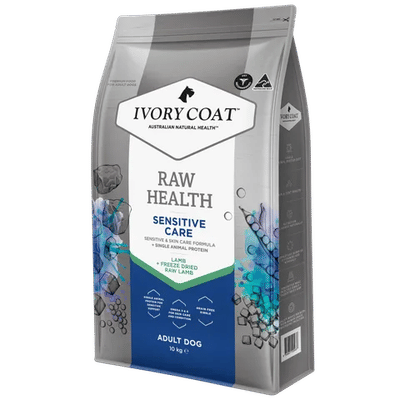
Ivory Coat
Ivory Coat Raw Health Adult Lamb Sensitive
$119.97
$143.00Save up to $23.03
$12.00/kg

Prime100
Prime100 SPD Kangaroo & Potato Fresh Roll
$24.99
$26.99Save up to $2.00

Ivory Coat
Ivory Coat Slow Cooked Kangaroo Grain Free Adult Frozen Dog Food
$6.99
$27.96/kg

SavourLife
Savourlife Roo Raw Adult Dog Food
$35.99
$13.23/kg
What type of dog are you shopping for?

Ivory Coat
Ivory Coat Raw Health Puppy Chicken Grow
$19.94

SavourLife
Savourlife Chicken Raw Puppy Dog Food
$30.99
$11.39/kg

Subscription prices can save 2-15%
Some stores offer autoship discounts. These range between 2.5-15% off when you set up a repeat delivery.

SavourLife
Savourlife Sensitive Ocean Fish Raw Adult Dog Food
$35.99
$13.23/kg

Prime100
Prime100 SPD Raw Kangaroo & Vegetable Dog Food
$29.99
$17.64/kg

Orijen
Orijen Dog Dry Food - Six Fish
$59.95
$29.98/kg

SavourLife
Savourlife Combo Raw Adult Dog Food
$30.99
$11.39/kg

Prime100
Prime100 Fresh Chicken & Vegetable Fresh Roll Dog Food
$11.00
$7.67/kg
Raw-fresh differs from freeze-dried and air-dried in that it stays in its original state — refrigerated or frozen — rather than being shelf-stabilised through water removal. That means the product retains its full moisture content and is typically sold in portion-sized patties, blocks, or meal packs. Complete formulations include bone, organ, and supplemental vegetables to meet AAFCO-equivalent standards; 'mixer' or 'component' products are raw ingredients intended to be combined with other elements of a home-prepared diet. Single-protein recipes dominate the category, with lamb, beef, kangaroo, chicken, and occasionally duck or venison as the primary proteins.
In Australia, raw-fresh appeals to owners who want the closest thing to a natural diet without sourcing and balancing ingredients themselves. It suits dogs with chronic skin or digestive issues that haven't responded to commercial kibble, and dogs whose owners are comfortable with freezer space, thawing routines, and food-handling hygiene. The trade-offs are real: cost per kilo is high, storage requires a dedicated freezer drawer, and the handling standards matter — raw diets aren't set-and-forget.
How to choose
Before committing to raw-fresh, be honest about storage and routine. You'll need freezer space for at least a week's supply, a dedicated thawing spot in the fridge, and separate prep surfaces and utensils for hygiene. Look for 'complete and balanced' on the label if the product is intended as a sole diet — 'complementary' or 'component' products need to be balanced with other ingredients. Single-protein recipes are the starting point for dogs with sensitivities. Check the inclusion of bone: raw diets derive calcium from ground bone, and recipes without it need a calcium supplement to be complete. For first-time raw-feeders, start with a gentle single-protein recipe like chicken or lamb rather than a novel protein, and transition over 10-14 days rather than the usual 7 — raw diets cause looser stools in dogs adjusting from kibble.
Key considerations
Storage is non-negotiable
Raw-fresh needs freezer space and controlled thawing. If your freezer is already full, this isn't the format for you.
Handling hygiene matters
Use separate surfaces and utensils for raw prep. Wash bowls after each meal — raw diets aren't set-and-forget.
Complete vs component
Only 'complete and balanced' products work as a sole diet. Component products need to be paired with other ingredients to balance.
Gentle first protein
Start with chicken or lamb for the first-time raw-feeder. Novel proteins belong later in the transition, not at the start.
Longer transition window
Raw diets cause looser stools in dogs used to kibble. Transition over 10-14 days rather than the usual week to let the gut adjust.
Frequently asked
Is raw food better than kibble?+
For some dogs with chronic skin or digestive issues, raw diets genuinely help where kibble has failed. For most healthy dogs, a quality kibble is nutritionally adequate and far more practical. Raw-fresh is a commitment to handling, storage, and cost that pays off for dedicated owners — it's not a default choice for every dog.
Do I need to freeze raw dog food?+
Yes, unless you're using it within a day or two of delivery. Most commercial raw-fresh products arrive frozen and should stay frozen until the day before you feed them. Thaw in the refrigerator overnight — never on the counter — and use thawed product within 2-3 days.
Can I feed raw to puppies?+
Yes, but with more care. Puppies need precise calcium-to-phosphorus balance for growth, so 'complete and balanced for all life stages' or 'for growth' on the label is essential. Mixed, component-style raw products are not appropriate for puppies unless you're working with a qualified nutritionist. Commercial complete recipes labelled for growth are the safer path.
Is raw food safe to handle?+
With normal hygiene, yes. Wash hands, utensils, and bowls after contact, use separate chopping boards for raw meat, and clean feeding areas after each meal. Households with immunocompromised members, young children, or elderly people should think harder about the handling implications before committing.
Why is raw dog food so expensive?+
You're paying for whole cuts of meat, bone, and organ at human-food-adjacent quality and scale, plus cold-chain storage and transport. It's genuinely more expensive to produce than kibble, which is built around grain-based extrusion. Many owners offset the cost by mixing raw with a quality kibble rather than going fully raw.